Water heaters
Water heater leaking? What to do and when replacement makes sense
The quick answer
Stop using a leaking water heater and arrange an assessment. A connection or valve problem may be repairable; a confirmed leak through the storage tank usually calls for replacement. Water on the floor alone does not identify the failed part.
In this guide
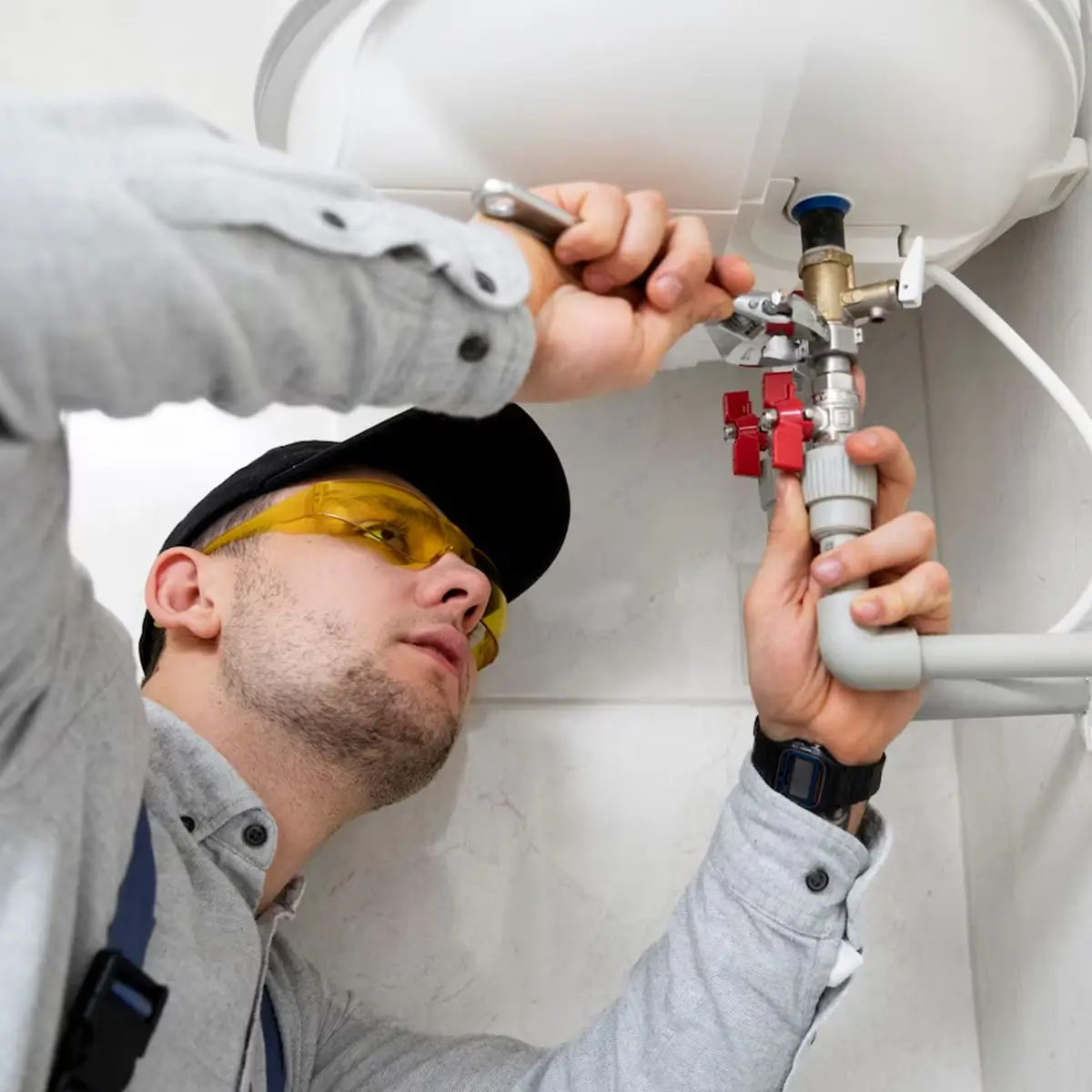
A puddle near the water heater is a reason to act, even if the shower is still hot. The useful first question is where the water originates. It may be traveling from a connection, a valve, another nearby source, or the tank itself.
This guide helps you prepare for a water-heater service conversation. It is not a reason to keep a leaking unit running while you try different repairs.
What should you do first?
If you smell gas or suspect a gas leak, leave immediately. Avoid operating switches, phones, or other possible ignition sources nearby. Once safely away, call the gas utility and 911. Nicor Gas’s emergency guidance explains what to do and lists its emergency number.
For a water leak without signs of a gas emergency, keep away from hot discharge and standing water near electrical equipment. If the controls are safely accessible and you know how to use them, follow the unit’s instructions to shut off its energy and cold-water supply. If you are unsure, contact a professional for guidance rather than experimenting with valves or wiring. Do not open electrical access panels or work on gas connections.
A. O. Smith’s leaking-water-heater guide recommends shutting the unit down and obtaining a professional diagnosis. When calling, describe whether the water is a slow drip, an intermittent release, or a growing puddle.
Does a leak from the bottom mean the tank has failed?
Not necessarily. Water can run down the outside of the heater and collect underneath, so the puddle’s location is only a starting point.
| Observation | What needs checking |
|---|---|
| Moisture near the upper connections | Supply connections and fittings |
| Water near a valve or discharge pipe | The valve and the condition causing the discharge |
| Water apparently emerging from the tank body | Whether the storage tank has deteriorated |
Rheem’s guidance on water-heater warning signs explains that fittings and valves can be responsible for leaks, while deterioration inside the tank can require replacement. A plumber needs to establish the source before recommending a remedy.
Could it be condensation?
Some moisture around a gas-fired storage heater can be condensation associated with cold surfaces and burner operation. That possibility should be checked rather than assumed.
A. O. Smith’s condensation bulletin distinguishes condensation from a tank leak. Note when the moisture appears and whether it follows heavy hot-water use. Share those observations, but do not leave an unexplained leak unattended to prove a theory.
Why is the pressure-relief pipe dripping?
The temperature-and-pressure relief valve is a safety device. Discharge can involve temperature, pressure, thermal expansion, or a valve problem. Replacing the valve without identifying the cause may leave the underlying issue unresolved.
Never cap or plug the valve or its discharge line. A. O. Smith’s relief-valve bulletin explains its protective function. Tell your plumber whether the discharge is continuous or intermittent and whether it has happened before.
Should you repair or replace the water heater?
Ask for a recommendation based on the identified failure and the condition of the whole unit. A serviceable connection is a different situation from a corroded storage tank.
Before deciding, gather:
- The manufacturer’s name, model, serial number, and installation date, if known.
- Any warranty paperwork or recent service records.
- Changes in hot-water availability, temperature, noise, or appearance.
- Whether your household’s hot-water needs have changed.
- Photos of visible moisture taken without moving or opening equipment.
Ask what the proposed work includes, what caused the problem, and whether anything else in the installation needs attention. If replacement is recommended, discuss the equipment, installation requirements, disposal of the old unit, and the written estimate. Our tank versus tankless guide explains how storage, flow, and winter inlet conditions change that choice.
Accurate Plumbing’s water-heater services include discussing repair, replacement, installation, and maintenance. The right recommendation follows an assessment of your home and equipment.
Can you still shower with a leaking water heater?
Do not continue using the heater simply because it still produces hot water. There is no reliable “safe number of days” for a leaking unit based on a description or photo. Get guidance on the specific problem and what should remain shut off until it is assessed.
For a separate problem limited to one faucet, our low kitchen-faucet pressure guide explains the observations worth making before a service call.
Request water-heater help in Plainfield or Naperville
Call (815) 254-1677 or request service. Tell us your address, where you see water, and whether the unit has been shut down. We will confirm coverage and current availability; an online request does not reserve an appointment.